Baseball Bounce Back Net Guide: 4x4 and 5 ft Pitchback Nets for Training
A bounce back net lets a player practice throwing and fielding alone in the backyard. Here is how to choose between 4x4 and 5 ft pitchback nets and the drills that make them worth it.

In this article
A baseball bounce back net, also called a pitchback or rebounder, is a tight net stretched on a frame that returns the ball when you throw at it. It turns a backyard into a practice field: players can work on throwing accuracy, fielding ground balls, catching line drives and pitching mechanics without a partner. For young players, it is one of the most useful training tools a family can buy.
What a bounce back net does
When a ball hits the tensioned netting, it rebounds toward the thrower. By changing the angle of the net, you can make the ball come back as a grounder, a line drive or a pop-up. Many nets include a strike zone target, which turns throwing practice into accuracy training.
4x4 vs 5 ft nets
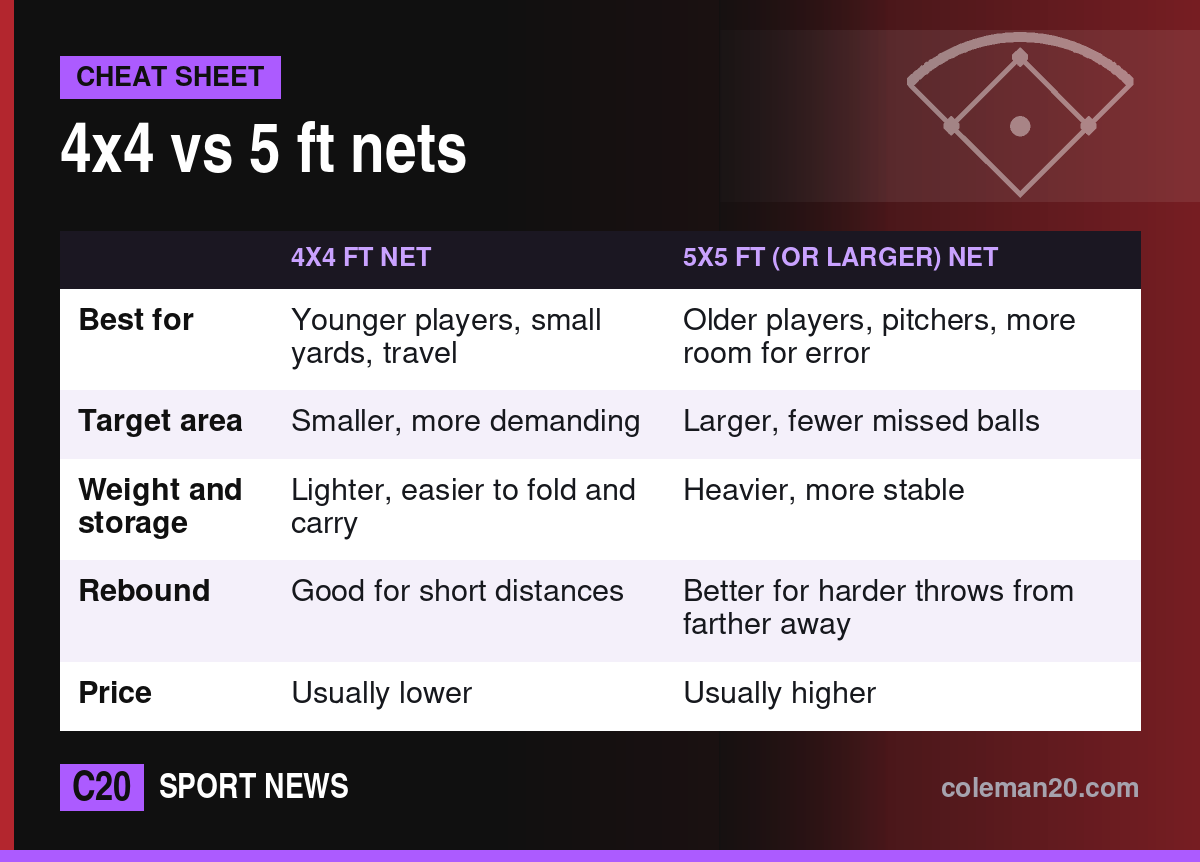
| 4x4 ft net | 5x5 ft (or larger) net | |
|---|---|---|
| Best for | Younger players, small yards, travel | Older players, pitchers, more room for error |
| Target area | Smaller, more demanding | Larger, fewer missed balls |
| Weight and storage | Lighter, easier to fold and carry | Heavier, more stable |
| Rebound | Good for short distances | Better for harder throws from farther away |
| Price | Usually lower | Usually higher |
A 4x4 net is a great first net for kids who are learning to throw and field. Teens and pitchers who throw harder often prefer a 5 ft net because it catches more off-target throws and stays steadier.
What to look for
Frame
Steel frames are sturdy and handle hard throws; lighter frames are easier to move but can tip or bend. Look for wide legs or ground stakes for stability.
Netting and tension
Good rebounders use thick, weather-resistant netting attached with bungee cords or springs. Adjustable tension lets you control how hard the ball comes back. Replacement nets are useful, since netting wears out over time.
Adjustable angles
The most versatile nets tilt to several angles, so you can practice grounders, line drives and fly balls.
Strike zone target
A removable strike zone helps pitchers aim and gives young players a clear target.
Portability
Folding frames and carry bags make it easy to take the net to the park or to practice.
Weather resistance
If the net will stay outside, look for rust-resistant frames and UV-resistant netting.
Setting up your net
- Choose a flat, open area with no windows, cars or people behind the net.
- Place it in front of a fence or wall in case balls miss.
- Stake the legs down or add weights for stability.
- Start with the net upright for line drives, then adjust the angle for different drills.
- Begin about 15 to 20 feet away and move back as accuracy improves.
Best solo drills
Ground ball fielding
Tilt the net so the ball returns as a grounder. Throw at the lower half, field the rebound in a proper fielding position, and repeat. Practice forehand and backhand by throwing slightly to each side.
Quick-release throwing
Catch the rebound and throw again as fast as possible with good mechanics. This builds the quick transfer infielders and catchers need.
Accuracy targets
Use the strike zone or tape a target on the net. Count how many throws out of ten hit the target, and try to beat your score.
Pop-ups and fly balls
Angle the net upward so balls come back high. Practice tracking and catching with two hands above your head.
Pitching practice
Pitchers can work on mechanics and command with a strike zone target. Keep track of pitch counts and follow age-appropriate guidelines, such as those from MLB and USA Baseball's Pitch Smart program, to protect young arms.
Softball and other sports
Many rebounders also work for softball, and some players use them for soccer, lacrosse or volleyball practice.
Weekly training plan for young players
| Day | Focus | Time |
|---|---|---|
| Monday | Ground balls and quick release | 15 minutes |
| Wednesday | Accuracy throwing at targets | 15 minutes |
| Friday | Fly balls and line drives | 15 minutes |
| Weekend | Light pitching or catch with family | 20 minutes |
Short, focused sessions several times a week build skill faster than one long session, and they help avoid overuse.
Safety tips
- Wear a glove and consider a protective cup or face guard for fast rebounds.
- Make sure younger siblings and pets stay away from the rebound zone.
- Check the netting and bungee cords regularly and replace worn parts.
- Do not stand too close when throwing hard; rebounds can come back quickly.
Looking for second-hand training gear? See used sporting goods near me. For fun facts to share during practice, read cool baseball facts.
Frequently asked questions
What is a baseball bounce back net?
A tensioned net on a frame that returns thrown balls, letting players practice throwing and fielding alone.
Should I get a 4x4 or 5 ft pitchback net?
A 4x4 net suits younger players and small spaces; a 5 ft net is better for older players and pitchers who throw harder.
How far should I stand from a rebounder?
Start about 15 to 20 feet away and move back as accuracy and comfort improve.
Can I use a pitchback net for softball?
Yes. Most baseball rebounders also work well for softball training.
Keep reading



Editors' picks
- What Sport Season Is It Right Now? A Month-by-Month Guide to US SportsSports Facts
- The Hardest Sports in the World, Ranked by What They DemandSports Facts
- What Is the Most Watched Sport in the World? Global and US RankingsSports Facts
- 30 Cool Baseball Facts Most Fans Don't KnowBaseball
- The Most Famous Sporting Events in the WorldSports Facts